
Middlesex Release Date Fields
NJDOC uses three fields that answer three different questions. Current Max Release Date is a moving calculation for the maximum end of the term. Current Parole Eligibility Date is the expected point at which the person becomes eligible under State Parole Board calculations. Date Out-of-Custody is a historical field documenting actual departure from NJDOC custody.
Keep the labels attached to every date. A future parole eligibility date does not guarantee a grant. A maximum date can change as earned or lost time is posted. An old Date Out-of-Custody may belong to an earlier incarceration-history row rather than the current sentence. Compare the SBI number, county of commitment, sentence date, offense, and exact history segment before deciding which date controls.
| NJDOC field | Meaning | What it does not prove |
|---|---|---|
| Current Max Release Date | Latest calculated maximum-end date | Actual departure on that date |
| Current Parole Eligibility Date | Expected eligibility under SPB calculation policy | Parole grant or release |
| Date Out-of-Custody | Historical departure from NJDOC physical custody | End of parole or all other authority |
Find Middlesex Inmate Release Dates
First determine whether the person is at MCACC, in an NJDOC institution, or held by another authority. The NJDOC offender search is for state commitments. It is not a date tool for every person booked at MCACC. A county detainee appears in the state system only when NJDOC has the corresponding offender or commitment record.
Use this source order:
- Confirm the person and current custody system with at least two identifiers. Use booking, inmate, or SBI number when available.
- For NJDOC, open incarceration and current-sentence history. Read Current Max Release Date and Current Parole Eligibility Date in their proper row.
- For a county sentence, call MCACC Records at 732-951-3355 and ask for the existing release-calculation record or the proper request route.
- For pretrial custody, check the court order, bail or pretrial-release status, and every hold. Do not apply sentence credits where no sentence controls release.
- When the date arrives, confirm actual departure through MCACC Released Date/Time or NJDOC Date Out-of-Custody and check whether another authority received the person.
The official NJDOC search shows where state records begin.
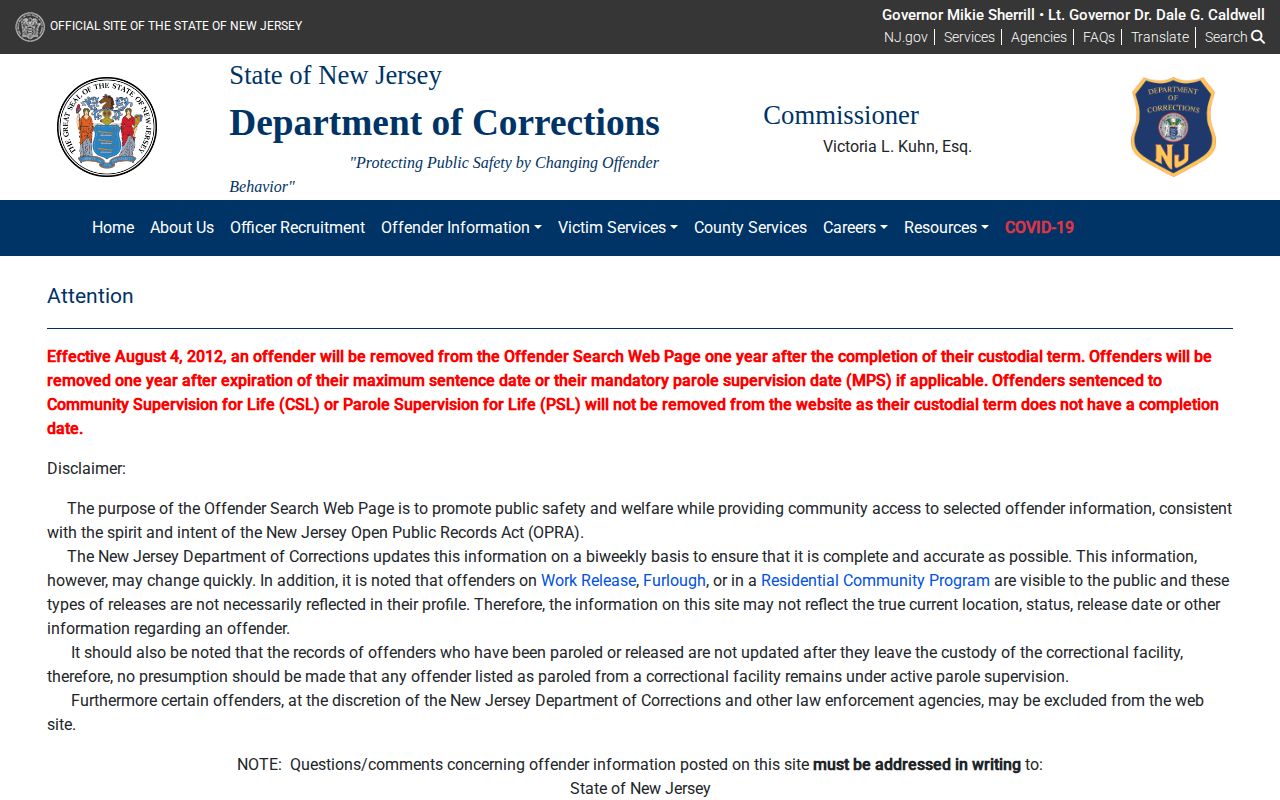
The search is useful for a state commitment, but the displayed fields must be read with the sentence history rather than copied as one undifferentiated release date.
Note: A person absent from the current MCACC roster may have been released, transferred, moved under a hold, or omitted for another reason.
Middlesex Pretrial Release Timing
A pretrial detainee normally has no sentence-derived projected release date. Release may depend on a judge’s order, pretrial conditions, bond where authorized, dismissal, another pending case, or a receiving hold. A listed charge and a court date are not enough to calculate when the person leaves MCACC.
The direct county Archonix interface can later show Released Date/Time for the booking. That field confirms the MCACC episode ended, but it does not state community destination unless the disposition or receiving agency also supports that conclusion. When another county, NJDOC, U.S. Marshal, or ICE is involved, physical departure from MCACC can be a transfer.
For a future pretrial event, use the criminal case and MCACC Records. If the court changes release terms, the controlling order and all holds must be processed before jail departure. Do not offer a countdown based on an announced hearing or a payment alone.
Middlesex County Sentence Dates
A person serving a county term needs a county calculation, not an NJDOC maximum date. Request the commitment, judgment, jail credit information, and the existing MCACC release-calculation record. County institution credits may implicate N.J.S.A. 30:8-28.1 and related provisions, but the correct application depends on the sentence and record. A public hand calculation can miss an amended order, concurrent or consecutive term, forfeiture, restoration, or outside hold.
No authoritative Middlesex-specific weekend or holiday early-release rule was verified. Do not shift a Sunday date to Friday or claim an automatic calendar adjustment. MCACC Records and the court should confirm the operational date. If a release date has passed without a public result, ask whether the person transferred, whether another hold applied, and whether the source has posted the final event.
A county sentence can end while a separate case continues. It can also be followed by probation. Keep the physical jail date separate from the court’s supervision order. The Middlesex County parole and probation page explains which agency confirms each form of supervision after departure.
When requesting the county calculation, identify the person, booking number, commitment date, sentencing court, and approximate term. Ask for existing fields or documents rather than asking staff to predict a date from a narrative. The court commitment explains legal authority; the jail calculation shows how MCACC applied the term. If the two seem inconsistent, preserve both and seek an official clarification instead of choosing the date that appears earlier.
Middlesex Release Date Changes
Projected dates move for legal and administrative reasons. NJDOC specifically warns that Current Max Release Date can differ at month end as time earned or added for conduct is posted. A court amendment can alter the sentence itself. A parole decision affects the path to release, while a detainer can send the person to another authority even when one term ends.
| Change | Possible effect | Best record |
|---|---|---|
| Earned commutation or work credit | May move the calculated maximum earlier | NJDOC calculation or official sheet |
| Disciplinary forfeiture or restoration | May add or return credited time | NJDOC sentence calculation |
| Court amendment | Can change term, concurrency, or credit | Amended judgment or order |
| Mandatory minimum | Limits when release may occur | Judgment and governing statute |
| Parole decision | May set conditions and a future date or deny release | Written SPB decision |
| Detainer or receiving hold | Can turn departure into transfer | Movement record and receiving authority |
Multiple admissions can make old and current dates look inconsistent. Never “correct” an official field through arithmetic. Ask NJDOC, SPB, MCACC, or the court for the calculation tied to the exact sentence row.
Middlesex Commutation Credit Rules
R.S. 30:4-140 establishes progressive commutation credits for continuous orderly conduct and permits forfeiture for flagrant misconduct. The statutory schedule begins with 72 days for one year, 156 for two, 252 for three, 348 for four, and 444 for five. It continues for longer terms and adds 192 days for each year beyond 30, prorated at 16 days for each full fractional month.
Those figures explain one component of a New Jersey calculation. They should not be applied in isolation. Sentence structure, offense date, jail credits, mandatory minima, work and minimum-custody credits, disciplinary history, and later court orders can all matter. N.J.S.A. 30:4-92 governs state work and minimum-custody credits, while county institution credits involve a different statutory path.
The official commutation-credit statute provides the source text.
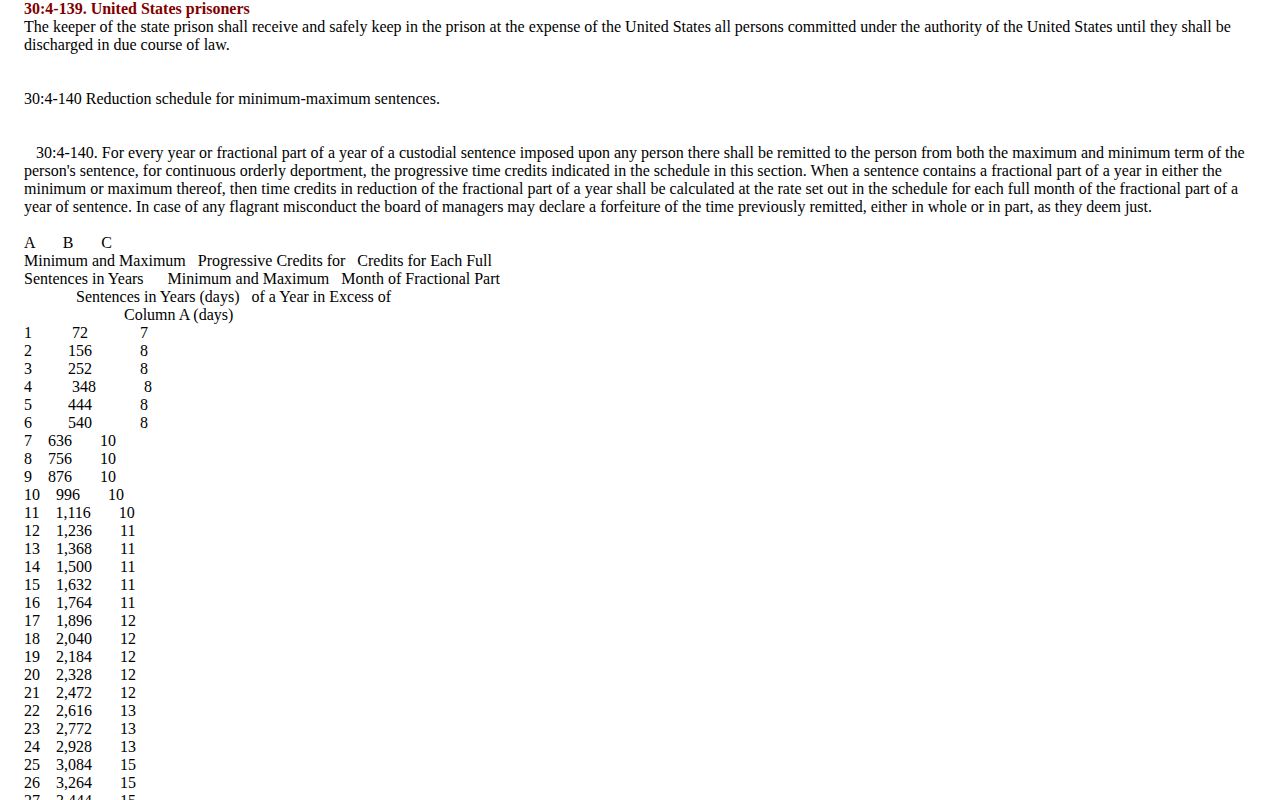
The statute helps explain why a calculated date can move. It does not supply a safe standalone release-date calculator for a specific person.
Middlesex Parole Eligibility Dates
N.J.S.A. 30:4-123.51 supplies a baseline for primary parole eligibility. An adult with a county penal-institution or state-prison term generally becomes primarily eligible after a judicial or statutory mandatory minimum, or after one-third of the term where none exists, subject to the statute’s credit rules. The State Parole Board applies the calculation under the person’s actual sentence and offense date.
Eligibility is only a threshold. The public weekly notices may show a consideration window, comment deadline, and a date through which a person may be released. They are forecasts, not decisions. A hearing can lead to a grant with a future date and conditions, a denial with a future eligibility term, or another formal outcome. Obtain the written Board decision when the result matters.
Current Parole Eligibility Date should never replace Date Out-of-Custody in a past-release statement. It can also change under Board calculation policy. Preserve the exact label and capture date whenever the field is cited.
Middlesex NERA Release Dates
The No Early Release Act, N.J.S.A. 2C:43-7.2, requires an 85-percent minimum for enumerated first- and second-degree violent crimes. It does not mean every New Jersey prisoner serves 85 percent. The judgment and offense control whether NERA applies.
NERA does not shorten another mandatory minimum. For its calculation, life is deemed 75 years. The law also provides post-incarceration parole supervision within its statutory structure, including five years for a first-degree NERA sentence and three for a second-degree sentence. These rules are reasons to read the judgment rather than estimate from the original term alone.
The official New Jersey statute shows the limited scope of the rule.
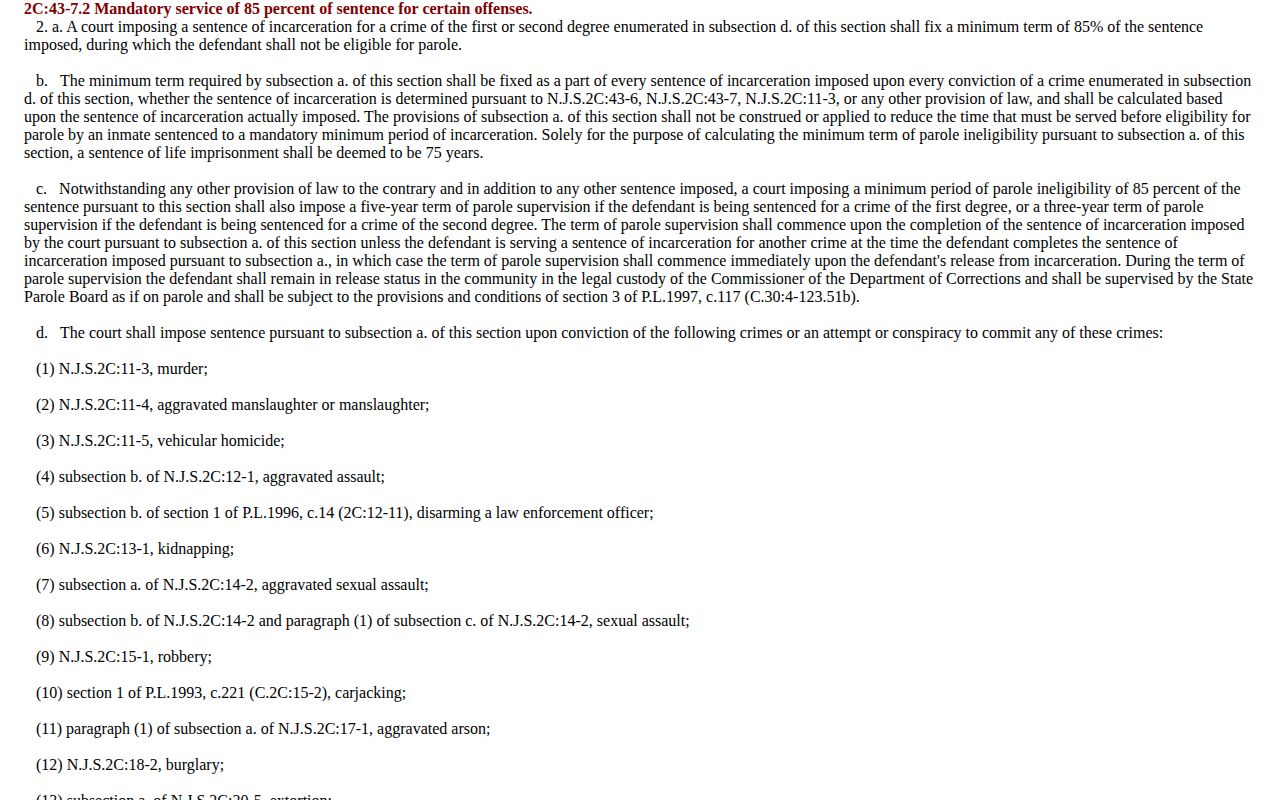
The law’s 85-percent language must be tied to an enumerated offense and court sentence, not applied across all Middlesex commitments.
Note: Mandatory minimum, maximum release, parole eligibility, parole grant, and actual departure are separate milestones in a New Jersey sentence.
Confirm Middlesex Actual Release
When a projected day arrives, verify the event. For MCACC, use Archonix Released Date/Time and ask Records for disposition or receiving agency when needed. For NJDOC, locate Date Out-of-Custody in the correct history row. For BOP, use its release date and status language. For ICE, use the official locator or inquiry channel within the applicable recent window.
A release alert from VINE can preserve notice of the change, but it is not the final archive. The Middlesex VINELink release check shows how to save and corroborate that message. Pair the alert with the originating record, especially after the public VINE result disappears.
Use calibrated wording. “The MCACC booking shows Released Date/Time” is supported by that field. “NJDOC records Date Out-of-Custody” is supported by the state history. “Returned to the community” requires a disposition or reliable confirmation that another authority did not take custody immediately.
Keep a dated copy of the source when planning depends on a projected field. NJDOC warns that the maximum calculation can move at month end, so a value captured earlier may no longer be current. Recheck near the expected date, then confirm the historical departure afterward. If a hold or transfer appears, follow the receiving agency rather than describing the original projection as a missed community release.
For older records, a missing public profile is not a date calculation. NJDOC’s public-web removal policy and the agency’s underlying retention duties are different subjects. Preserve the SBI and case details, then request the relevant history or calculation through the official records channel. Do not invent a retention term from the fact that a current web search returns no match.